Written by Oskar
Published on 20.01.2026
I've seen "A Clockwork Orange" for the first time. Here's my interpretation of the movie, which, I think, differs from and opposes common interpretation at a few key points. Enjoy — #fascism #democracy #hierarchy #anthropology #politicalsystems #moralphilosophy #freedom #freewill #freechoice #psychopathy #natureofevil
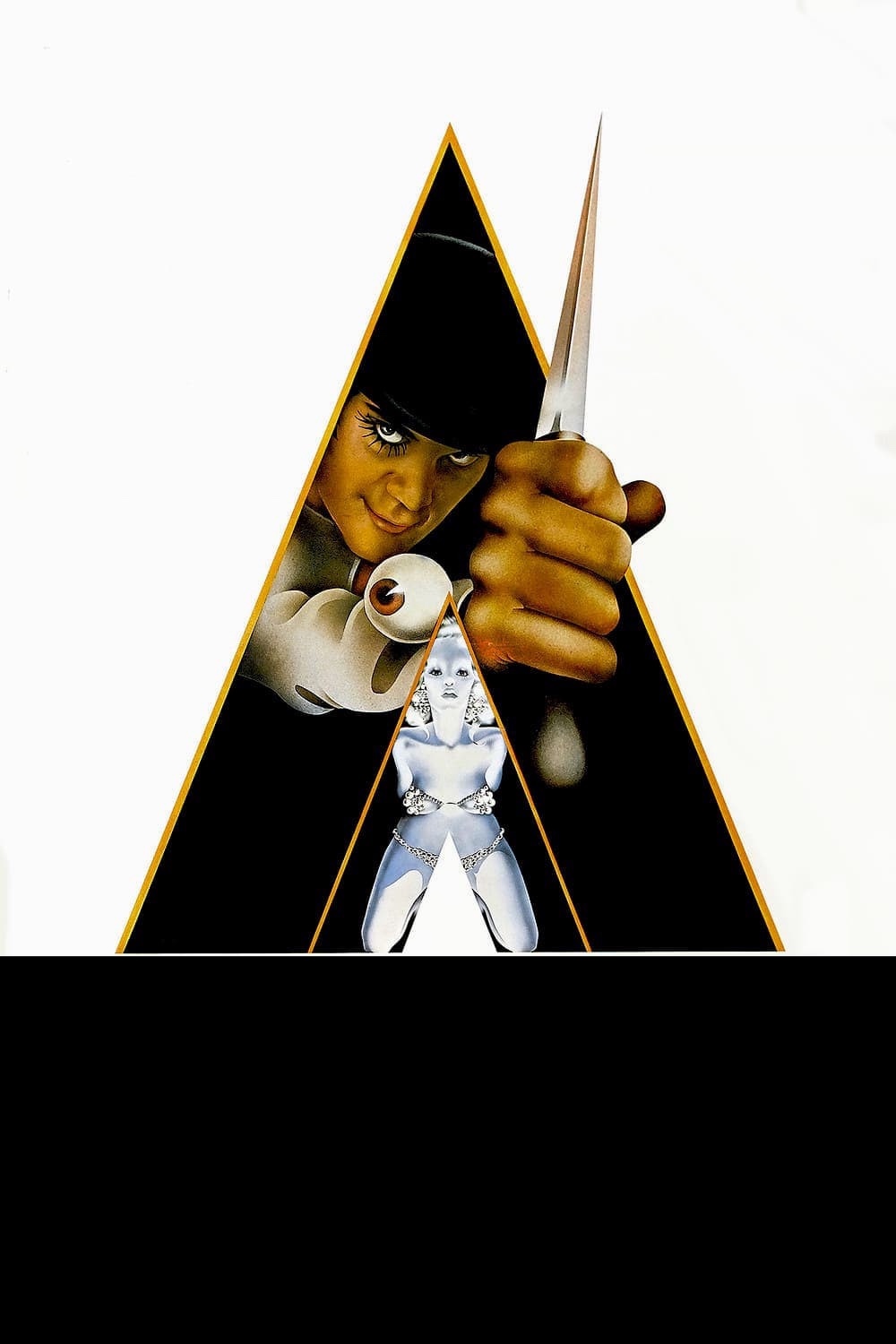
Movie Review: My Interpretation of "A Clockwork Orange"
a thought experiment… …that leads to critique of forms of rule
“a clockwork orange” is primarily and on a surface level a thought experiment demonstrating the nature of fascist methods of societal integration – and in that, it is very effective. the movie’s perspective suggests that we can judge the goodness of a system of societal organisation by looking at how it treats the worst people in society. thereby, we are lead to realise that not even the irredeemable deserve forceful synchronisation. from this viewpoint, the ending can be interpreted in two ways: a) these kinds of violent methods only reproduce violence or b) power corrupts people (back) into the worst versions of themselves.
however, the movie doesn’t look at electoral systems with free press, like we have them right now, in a positive way either, as it is implied that they produce evil: societal decline, crime and corruption leading to totalitarian parties taking over. the movie also shows that the liberal resistance against this kind of motion has to adopt equally extreme (meaning violent) methods to oppose totalitarianism, leading to their own moral corruption.
in a way, this movie is anti-hierarchical on every level, be it so-called electoral „democracy“ or fascism.
where the movie fails though (or at least leaves an opening), is in providing alternatives. it leaves the viewer choosing between to evils – one of them of the worst kind (fascism) and the other producing the former. we'll get back to that later.
on the film's moral philosophy: freedom of mind but not of act?
the key question the movie apparently asks on the level of moral philosophy is: should we have the choice to decide between good and evil or should we force people to do good, essentially taking away their choice. i think by what is shown in the movie, it is unreasonable to suggest that the latter strips away the humanity of a person. this is only the religious interpretation given to us by a pastor, which is strangely adopted by most people interpreting the movie. what the movie really does is showing us a character, who technically still has the same freedom to choose in his mind (the protagonist still wants to be violent) as before, but who can't act on that decision anymore. the problem the therapy creates is not taking individuality from the person itself, but making it impossible to really be who you are by taking away your freedom to express yourself how you want. the individuality (or humanity) is still there, but more cruely it cannot come out anymore. thus, the title of the movie itself is wrong in its suggested interpretation (for now in the analysis), as it implies clearly that a human is turned into a machine. the truth is that the human in fact is still a human of the same free choice in his mind like before, but not of the same free choice in his actions.
the question of free will and anthropology
with all that said, taking it even further, he really isn't free in his will (in what he wants), right? it's just for a different reason than common interpretation suggests: the reason is not the therapy, as I argued earlier, but it can be found somewhere else.
you see, our narrator is shown to be evil in almost every way: he is extremely violent towards everyone, lacks any conscience for it and he is deeply misogynistic of course. but he isn't shown choosing this evil over good. he isn't free in his will to do evil in the first place, really. people aren't truly free in choice because they aren't free in what they want [as per Schopenhauer]. so the essential question then is: why does our protagonist want what he wants?
tying things back into political philosophy
now, the movie does want to make it clear that he comes from a good family background, which is also why he isn't violent towards his parents. so, we need to search for his predisposition somewhere else. it could be meant to come from within, which would mean that he is by nature, how he is, or it can come from an external source, which would mean the broader societal context. society in the movie is shown to be fairly grim, chaotic and in the midst of transforming into fascism.
i think the movie leaves this open to interpretation. it is never explicitly shown or in all seriousness expressed that the protagonist's character is a result of his circumstances. however, the movie is told from his perspective and he is a very young man, so how should he know? and everyone else in the movie talking about this kind of stuff has no interest in blaming it on the societal status quo. the opposite is the case: most don’t want to question status quo. for their agenda and worldview, it makes more sense to just assume that this person is naturally evil. only the writer's character says it out loud once; that the protagonist is just a poor victim of the time. however, the movie doesn’t really take a stance on whether that is to be taken seriously.
my conclusion
i think, to make a clockwork orange make sense as a movie and as a title, it has to be the case that its protagonist's predisposition for violence is also the result of his circumstances. because only then can you make the case for the human being made into a machine, or in other words, their life, mind and will being machinistically determined by the systemic context they live in. the other option – the protagonist just being a natural psychopath – limits the movie to the surface level interpretation we started with, when the question should not be one of choosing between false freedom of choice or taking away choice altogether.
instead it should be: how can we make a society that doesn't produce destructive desires that then need to be surpressed? in which people that are prone to violence can be dealt with ethically? we shouldn't be choosing between a false freedom of choice and taking away choice altogether, but that is what we're doing, when we engage in fights between electoral aristocracy (or democracy, if you want to call it that) and fascism. the movie avoids taking part in these at all costs – and that's a strength!